

COLA REN
There are artists who use music to describe themselves, and there are artists who use music to describe the world in order to understand themselves more clearly. Cola Ren seems to belong to the second group.
Her music begins from the private places: a body recovering, a memory returning, a city filtering in through teenage headphones, a room that sounds different depending on who is standing inside it. But it also reaches toward the larger questions. What does it mean to be human? What do we carry from nature, from spirit, from industry, from technology? How does a person turn experience into sound without flattening the experience itself?
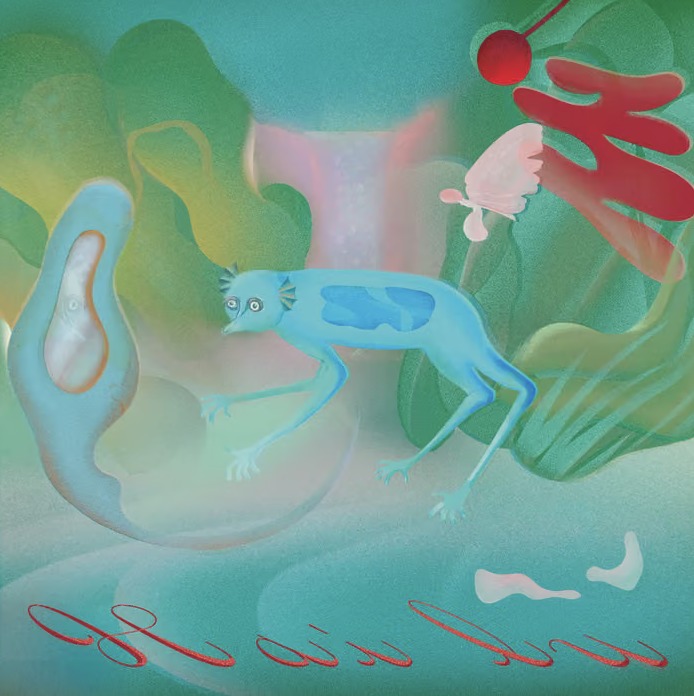
Cola’s debut EP, Hailu, used these questions as its foundation. The project was built as a reflection on the human condition and the progression of human society, moving through nature-based existence, spiritual life, industrial development, technological eras, and finally back toward the present. Traditional African and Southeast Asian instruments sat alongside a research-based interest in anthropology, creating a project that felt less like a simple debut and more like a compressed map of civilization.
It is a beautiful way to arrive as an artist: not by announcing a fixed identity, but by asking what identity is made of.
Before music became Cola’s primary language, there was photography. Before photography, there was Guangzhou. Growing up there, she remembers the city as a kind of gateway, a place where Hong Kong music, Western imports, and local subcultures could all pass through at once. As a teenager, she bought inexpensive pirated CDs, discovering bands like Arctic Monkeys and Blur through these imperfect little objects of transmission.
There is something important in that image: culture arriving slightly distorted, copied, circulated, loved anyway. Not pristine. Not official. Not always legal or cleanly categorized. Just music moving through the world until it finds someone who needs it.
Later, Cola moved to London to study photography at the London College of Communication, partly following the path of a mentor who had gone there before her. London became another kind of education. She spent that time going to live gigs several times a week, absorbing music not only as sound but as atmosphere: the room, the people, the lights, the volume, the small collective shift that happens when a performance is actually working.
In that sense, Cola’s music did not begin when she opened Ableton. It began much earlier, in the act of noticing.

Photography trains the eye to wait. Live music trains the body to listen. Moving between cities trains the mind to translate. By the time Cola began making music seriously, she had already spent years collecting images, spaces, fragments, and sensations. Sound simply became the next place for those materials to go.
Her transition into music came during the pandemic, after a foot injury in 2022 forced a different kind of stillness. She had learned piano as a child, but during recovery she returned to the instrument and began working in Ableton. Early demos were shared with producer friends, whose encouragement gave her enough confidence to release a self-funded EP. Rather than waiting for a label, she pressed 300 vinyl records with her own savings, using the process as a low-pressure way to learn how a release comes into the world.
When the body stopped moving, sound became another way to move.
That origin matters because it keeps the work close to survival, but not in a dramatic or romanticized way. Creativity is often described as expression, but sometimes it is more basic than that. Sometimes making something is how a person stays in relation to the world when the usual forms of relation have been interrupted. A melody becomes a small continuation. A rhythm becomes a way of keeping time. A project becomes proof that something inside you is still arranging experience into meaning.
For Cola, the freedom to make music without immediate financial pressure was also essential. She credits her previous career in photography with giving her enough stability to approach music without the burden of needing it to generate profit right away. In our conversation, she described how early financial pressure can kill creative “recklessness,” the fragile but necessary willingness to try something before it makes sense.
That word, recklessness, feels central.
Not recklessness as carelessness, but as permission. The permission to follow an idea too far. To spend money pressing records before anyone has told you it is a good idea. To make a debut about the entire human condition instead of choosing something smaller, safer, easier to explain. To let research and intuition sit in the same room.
Art often needs this kind of risk, but risk requires ground beneath it. There is a quiet honesty in Cola’s understanding of this. The myth of the artist usually celebrates struggle as if precarity itself produces better work. But Cola’s story suggests something different: that freedom, space, and stability can protect the part of the artist that is still brave enough to play.
Community entered her story in a similarly organic way. She was not aggressively chasing industry attention. Friends heard the demos. Someone working in PR shared them with DJs. Support arrived early from artists such as Ben UFO and Lena Willikens, giving the project a kind of external confirmation without turning it into a calculated campaign.
Music travels strangely. A track can be made alone, in a room, with all the uncertainty that comes with being new to a medium. Then someone hears it and passes it on. Then someone else plays it. Then the private signal becomes public. Not because it was optimized, but because somebody recognized something alive in it.
That, too, is part of being human: we need witnesses. We need other people to hear the thing we made and say, yes, there is something there.

After Hailu, Cola’s work began to move away from rigid conceptual frameworks and more toward sound design, imagery, and sensory memory. Her more recent music draws from fragments of travel in Thailand and Cambodia: humidity, water, atmosphere, and the kind of memory that returns less as a story than as a texture.
This evolution feels natural. If Hailu studied humanity at the scale of civilization, the later work studies it at the scale of sensation.
The human condition is not only history, industry, spirituality, and technology. It is also heat on skin. It is water nearby. It is a half-remembered room. It is the feeling of being far from home and somehow more aware of yourself because of it. It is the way a place lingers in the body after the itinerary has ended.
Cola’s music seems to understand that memory is not an archive we access cleanly. Memory is weather. It changes shape as it returns. It exaggerates one detail and erases another. It turns humidity into rhythm, water into sound design, distance into mood. In this way, her work treats composition almost like emotional archaeology. The track does not reproduce the past. It excavates what the past left behind.
This is also where her skepticism toward artificial intelligence becomes especially meaningful. In conversation, Cola was direct about her hesitation around AI in creative work. She worries that it can encourage laziness and remove the personal touch. While she may use AI for mundane commercial tasks, she avoids putting that kind of work under her own name, preferring tools that still allow for manual adjustment, editing, and control rather than full automation.
This tension is important. The question is not whether artists should accept every new technology or reject it outright. The better question is: what kind of tool keeps the artist’s hand present?
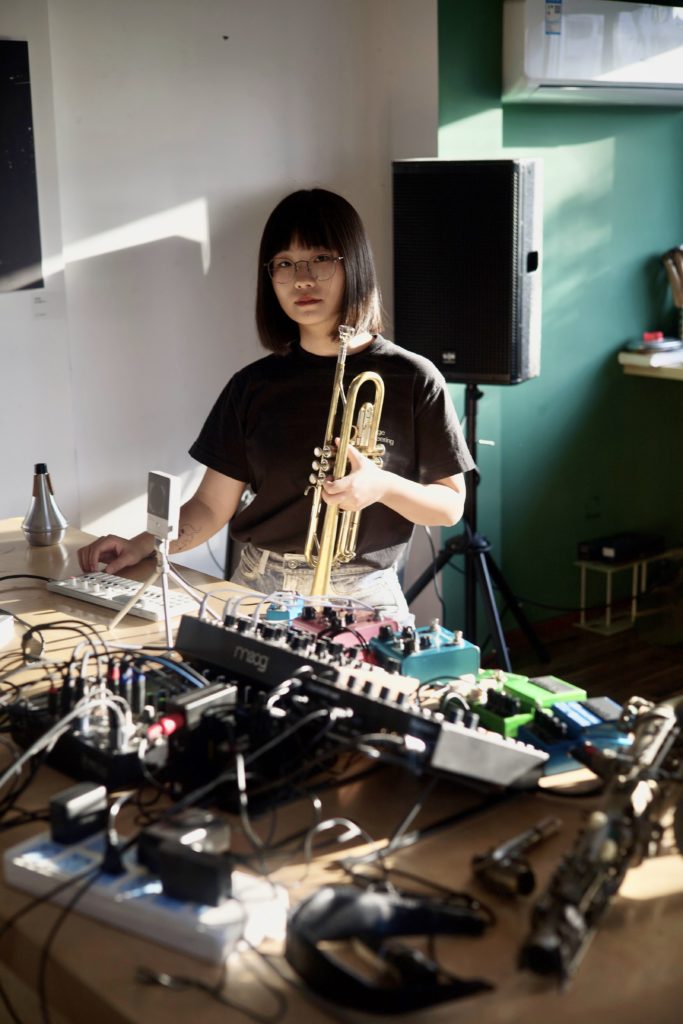
Cola’s position is not anti-technology. Her own music is made through contemporary tools, electronic processes, and sound design. But she is protective of the human residue inside the work. The small decisions. The taste. The accidents. The emotional pressure that cannot be generated on command. The feeling that a sound has passed through someone’s life before reaching yours.
This is where technology becomes most interesting: not as a replacement for human creativity, but as a surface where human intention can leave marks.
A tool should not make the artist disappear. It should make the artist more able to touch the material.
That question of touch also extends into performance. Cola cares about sound as an embodied event, not simply a file or finished track. The space and atmosphere of it all, the ambience created, the feeling of moving through physical space for a performance all matter.
It is a relationship between sound, body, architecture, attention, and time. The same music changes depending on the room that holds it. The human experience, again, becomes the real instrument.
This makes her upcoming performances feel like another stage in the same inquiry. Cola is scheduled to perform at Draaimolen Festival in Tilburg, a European underground festival known for its boundary-pushing curation and art installations, and she spoke about the opportunity with both nervousness and excitement. She also has an upcoming Berlin performance on August 28.
Nervousness and excitement are often close relatives. Both are signs that something matters. Both mean the body is paying attention.
Across Cola Ren’s work, there is a recurring movement between scale and intimacy. She can think in eras of human civilization, but she can also think in humidity. She can speak about technology, but what she is really defending is touch. She can build tracks from research, but the result is not academic. It is felt.
Maybe that is why the idea of the human experience as analogy feels so fitting. Her music does not try to define humanity directly. It circles it through sound. It asks whether we are nature, memory, machine, spirit, body, history, accident, or desire.
The answer, of course, is yes.
To be human is to be all of these things at once, with no final arrangement. We are ancient and technological. Social and isolated. Reckless and careful. Embodied and imagined. We are shaped by cities, injuries, friendships, tools, weather, and rooms. We inherit history, then misremember it into something we can use.
Cola Ren’s music does not try to escape the human condition. It listens inside it. It treats history, memory, technology, and sensation as parts of the same unfinished question: what does it mean to be here, in a body, among others, still making something?
And perhaps that is where creativity becomes more than expression. It becomes a way of continuing.
A way of surviving without closing down.
A way of touching the world back.

Cola Ren has a lot going on! Her most recent project is out and will be heading out on tour soon! Check everything out below.